Category: Science

The Digestive system

The digestive system is a group of organs working together to convert food into energy and basic nutrients to feed the entire body. Food passes through a long tube inside the body known as the alimentary canal or the gastrointestinal tract.

Food begins its journey through the digestive system in the mouth, also known as the oral captivity. Inside the mouth are many accessory organs that aid in the digestion of food—the tongue, teeth, and salivary glands. Teeth chop food into small pieces, which are moistened by saliva before the tongue and other muscles push the food into the pharynx.

Teeth. The teeth are 32 small, hard organs found along the anterior and lateral edges of the mouth. Each tooth is made of a bone-like substance called dentin and covered in a layer of enamel—the hardest substance in the body. Teeth are living organs and contain blood vessels and nerves under the dentin in a soft region known as the pulp. The teeth are designed for cutting and grinding food into smaller pieces .

your saliva is what brakes the food down as soon as it enters your mouth. Your tongue mixes the food with the siliva when it gets into your body it is then mixed with more of the siliva and then it is broken down.


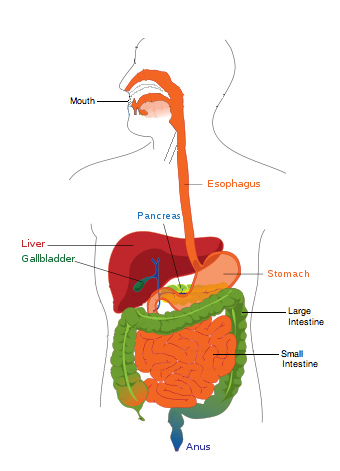
hear is a example of a digestive system


more about cells and tissues part 2

what is tissues ?

A tissue is a group of similar cells grouped together to do a particular job. Tissues exists in plant and animals. Examples of animal and plant tissues are:

ANIMAL TISSUES                                                                       PLANT TISSUES

muscle tissues                                                                               palisade tissue

epithelial cell                                                                                   root tissues

nervous tissues

More about cells and tissues.

What is a cell?

A cell is the smallest unit and the building block of an organism. All living organism have cells E.G Bacteria, plant, animals and unicellular organisms. A cell contains a nucleus which controls the activity of the cell and contains your DNA, mitochondria where most energy is released, cell membrane which controls what goes in and out and that holds it together, cytoplasm where most chemical reactions occurs  . how ever in a plant cell there are: vacuole which contains a solution of salt and sugar, cell wall the skin around the cell that gives support to the cell and finally chloroplast which is used to make photosynthesis.


Image result for simple animal cell model          Image result for simplelant cell model


ANIMAL CELL                                                         PLANT CELL


There are different types of cells in both animals and plants,these are:


ANIMAL                                                                                               PLANT

skin cells                                                                                              root hair cells

nerve cells                                                                                            ovary cells

muscle cells                                                                                          palisade cells

sperm cells                                                                                            xylem cells

Egg cells                                                                                                epithelial cell

epithelial cell                                                                                           phloem cell